From Coffee Beans to Wild Encounters
- Anna-Livia
- 6. Mai
- 3 Min. Lesezeit
Yesterday was a full day, with many different encounters and impressions.
We began the morning in Kawangware, visiting a school supported by a friend of a friend. A place built with a simple but powerful intention: to give children here a chance.
Schooling in Kenya is said to be free, but in reality, uniforms, books, and meals still need to be paid for. For many families, even that is too much. This school helps carry that burden, and slowly but surely, it is creating change within the community.



On the way home, we turned a corner and the scenery shifted abruptly. Informal, slum-like settlements suddenly gave way to high walls, large gates, and neatly trimmed hedges. Wealth and poverty, side by side, almost touching. The contrast felt close, almost unsettling in its proximity.


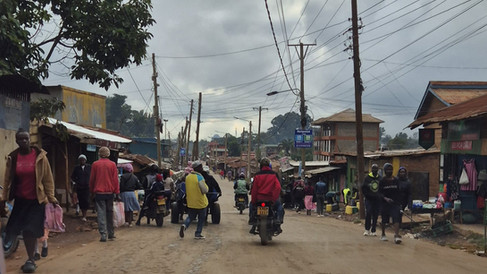


Back at the apartment, we packed our bags for the next part of our journey. This time, we would continue by car.
Our first stop was a different kind of classroom, one we would never find at home: a coffee plantation.

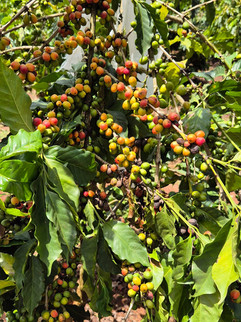
We learned all the steps from fruit to the final cup of coffee. We opened the coffee cherries and tasted the beans inside, curious and unsure of what to expect.
Polyxena laughed:“They taste so sweet!”
From there, the process unfolded: washing, drying, peeling, until only the green beans remained. We learned how they are sorted, combined in different sizes, and finally roasted.



Then we tried roasting the green beans ourselves.
Standing there, carefully turning the beans over the heat, we felt proud.
“They’re perfect,” Polyxena said.
“All evenly roasted,” Assunta added, with quiet satisfaction.






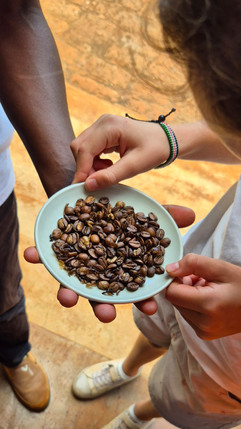
We walked further through the plantation, between rows of coffee bushes heavy with fruit. At around 1,400 metres above sea level, the conditions here are ideal. In the nursery, we saw how different plants are combined, stronger roots with more resilient leaves. Careful, patient work shaped by experience.


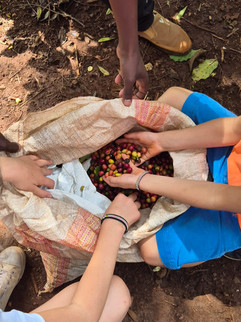

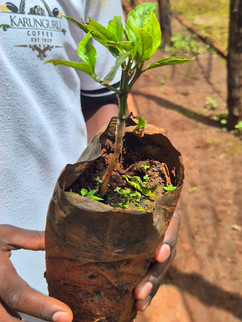


Our guide explained that once dried, the beans are transported under security. At this stage, coffee is often called Kenyan gold. Suddenly, the name made perfect sense, as we looked at long rows of golden beans drying in the sun.




We ended the visit by tasting different coffees, slowly and attentively, as if tasting and smelling Caffee for the first time.


It was a fascinating tour. Something so familiar suddenly felt much more complex. We learned how many factors shape the final taste of coffee, not only the type of bean, but also the drying and fermentation process, the blending of different bean sizes, and the degree of roasting. Each step plays a role in shaping the character of the coffee, and even whether it becomes an espresso or a lighter filter coffee.
From there, the journey continued towards Mount Kenya.
And then, another shift.
As we entered the wildlife estate where we will be staying the until June, the landscape opened into something almost dreamlike. Impalas moved lightly across the grass. Zebras stood still in the distance. Warthogs grazed, unconcerned. A bushbuck appeared and disappeared again between the trees.



It felt peaceful, wild, alive.
This morning, as we sat at breakfast, the familiar monkeys from Kilifi returned, as if to greet us again. Warthogs passed by slowly, almost casually.


Later, during homeschooling, a bushbuck crossed the garden. Julius tried to concentrate, but his attention kept drifting outside.
Then he pointed and said softly:
“Look at that bird.”
A white-browed robin-chat, small and striking.

The morning passed gently.
In the afternoon, we went out for a short drive. On the roadside, a group of zebras stood close enough for us to simply stop and watch.

We began to notice other changes too. Herds of cattle moved slowly across the land, guided by herders. In other regions, the animals had been tied or kept close. You rarely saw more than one or two together. Here, everything feels more open.
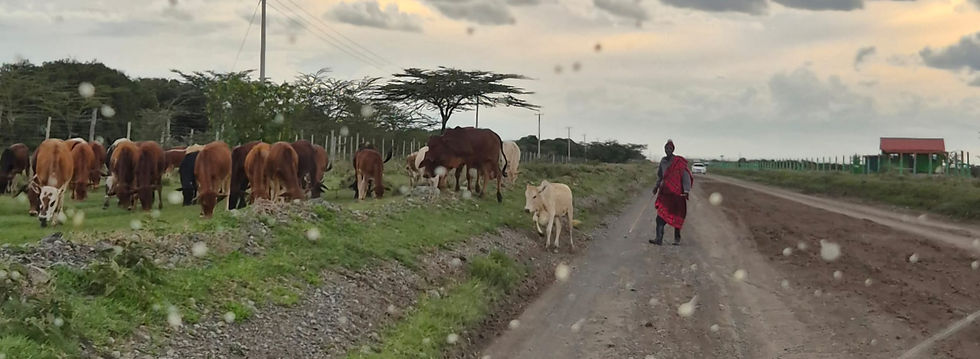
The land itself had changed as well.
We are now in the highlands, at around 2,000 metres above sea level. Higher than our home in the Swiss mountains, and yet it does not feel like the mountains we are used to. There is no real sense of altitude. Instead, everything is green, wide, and full of life.

In the late afternoon, the animals returned once more.
Zebras first.
Then two bushbucks.
And finally, our new favourites, the warthogs.
They came and went, undisturbed by our presence, though they occasionally looked up when someone opened the door to the terrace.


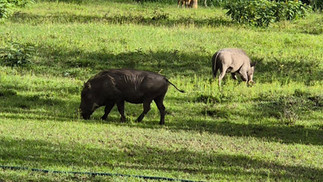
Grateful for this place. For this quiet, unexpected closeness to nature. For this side of Kenya, so different, and so beautiful.


Kommentare